Appendix: The Customer Map — From Need to Provider
Appendix (Chapter 10), outside the main sequence Builds on: Customer Distribution
All nine chapters so far look at the industry from the supply side: a company holds these licences, therefore it can do this. This appendix turns that around — you have one specific job to get done, so who out there can do it, what is each of them good at, and when should you not call them. The four figures split by customer type into two groups: the first two are people paying to solve their own problem (individuals, businesses), and the last two are a platform paying for a capability and then delivering it to its own users (B2B2C, B2B2B).
How to read a figure. One leaf is one claim; a blue + is an advantage in that scenario, an orange − is a drawback, or a reason not to pick it. The bracketed word is a dimension tag (cost, speed, access and so on), so you can scan a single tag straight down the figure and compare providers on that one face. A company shows up in several branches because it runs several product lines — Wise (the consumer product) ≠ Wise Platform (the infrastructure line), the Fiat24 app ≠ Fiat24 BaaS. A small dot to the left of a name means that name appears more than once in this figure, and the trade-offs in the two places do not carry across. The [reported], [?] and [inferred] markers after a line follow the course-wide convention; their definitions are in the Chapter 0 appendix. The figures render inline as thumbnails — click one to open the full-size original. Facts are as of 5 August 2026.
1. Individuals (B2C)
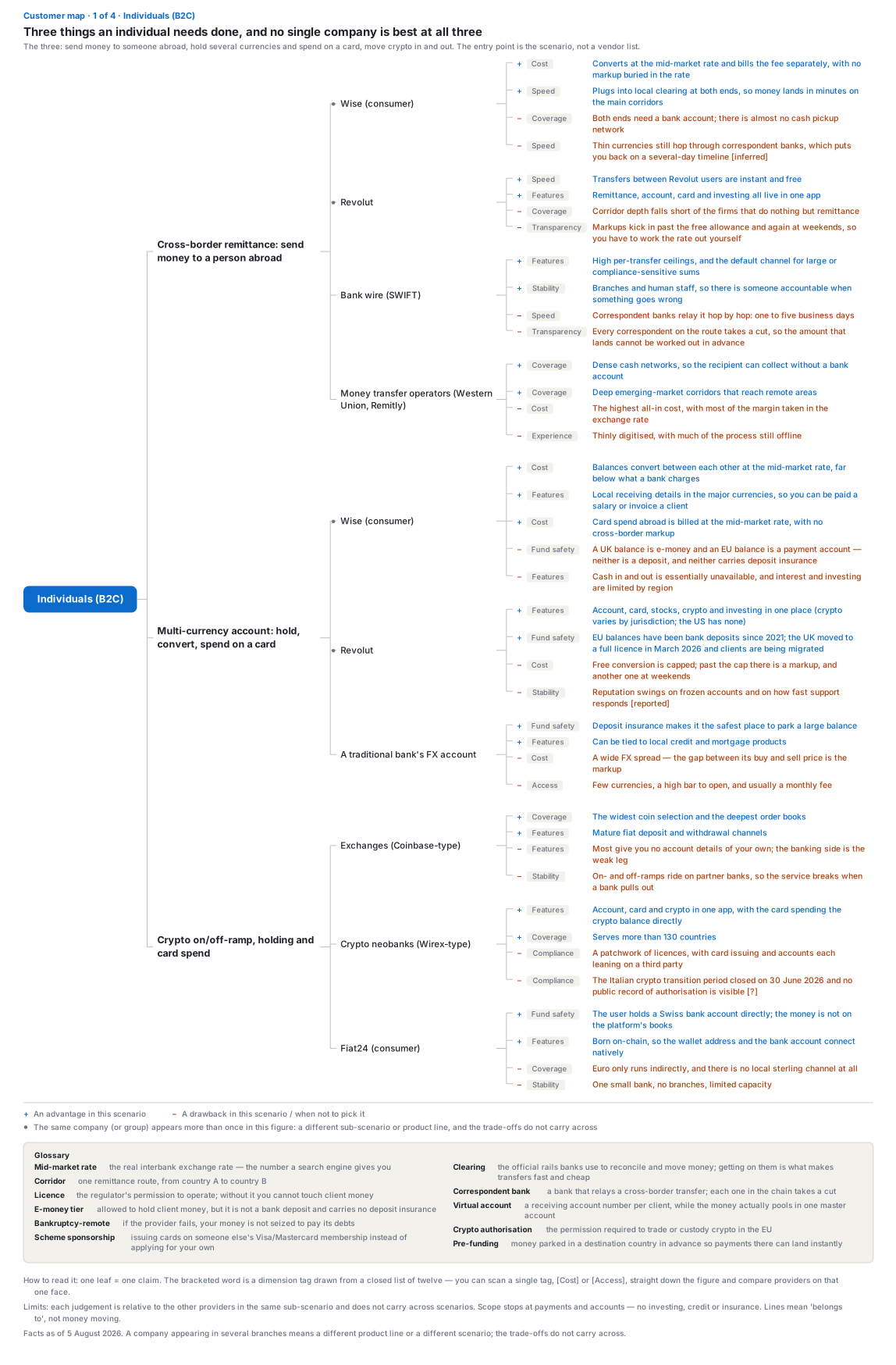
An individual has three jobs to get done: send money to someone abroad, hold several currencies and spend them on a card, and move crypto in and out.
The thing worth remembering in this section is that no company is best at all three. Wise and Revolut each cover the first two; the third brings in three entirely different names. The reason sits in the licences: trading and custodying crypto takes a separate one, Wise avoids it completely, and Revolut only pokes one corner into it with retail crypto trading.
2. Businesses (B2B)
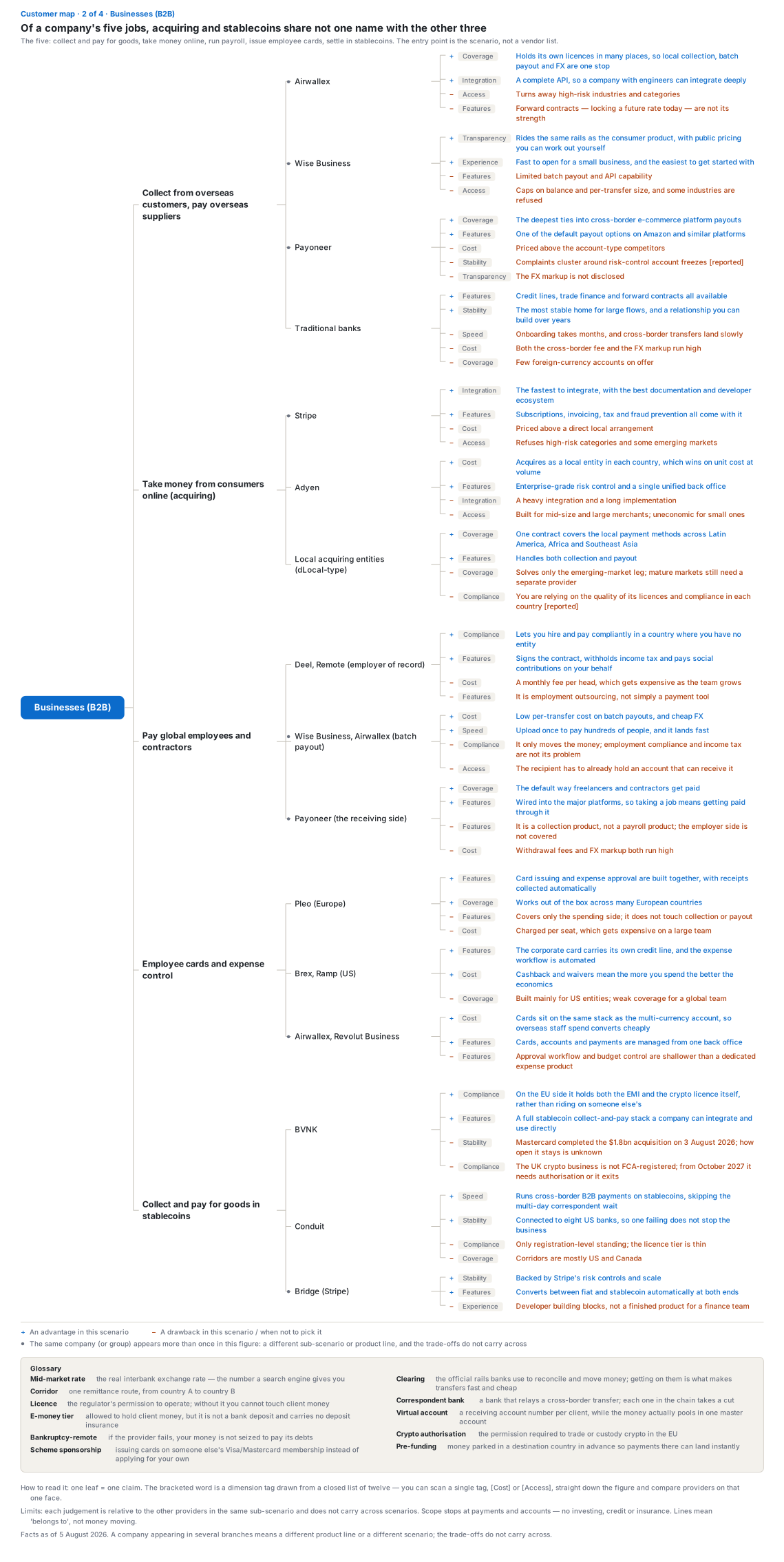
A company has five jobs of its own: collect and pay for goods, take money from consumers online (acquiring), pay staff around the world, issue employee cards and control expenses, and collect and pay in stablecoins.
The shape of this figure is unusually clean: on the acquiring and stablecoin jobs, not one of the six names appears on the other three. Meanwhile payments, payroll and employee cards overlap heavily through Airwallex, Wise Business and Payoneer. As a procurement rule that is one sentence: the first three jobs can share a supplier, the last two have to be bought separately. A single company covering all five does not exist on the market.
3. B2B2C: A Platform Buys Capability for Its Consumers
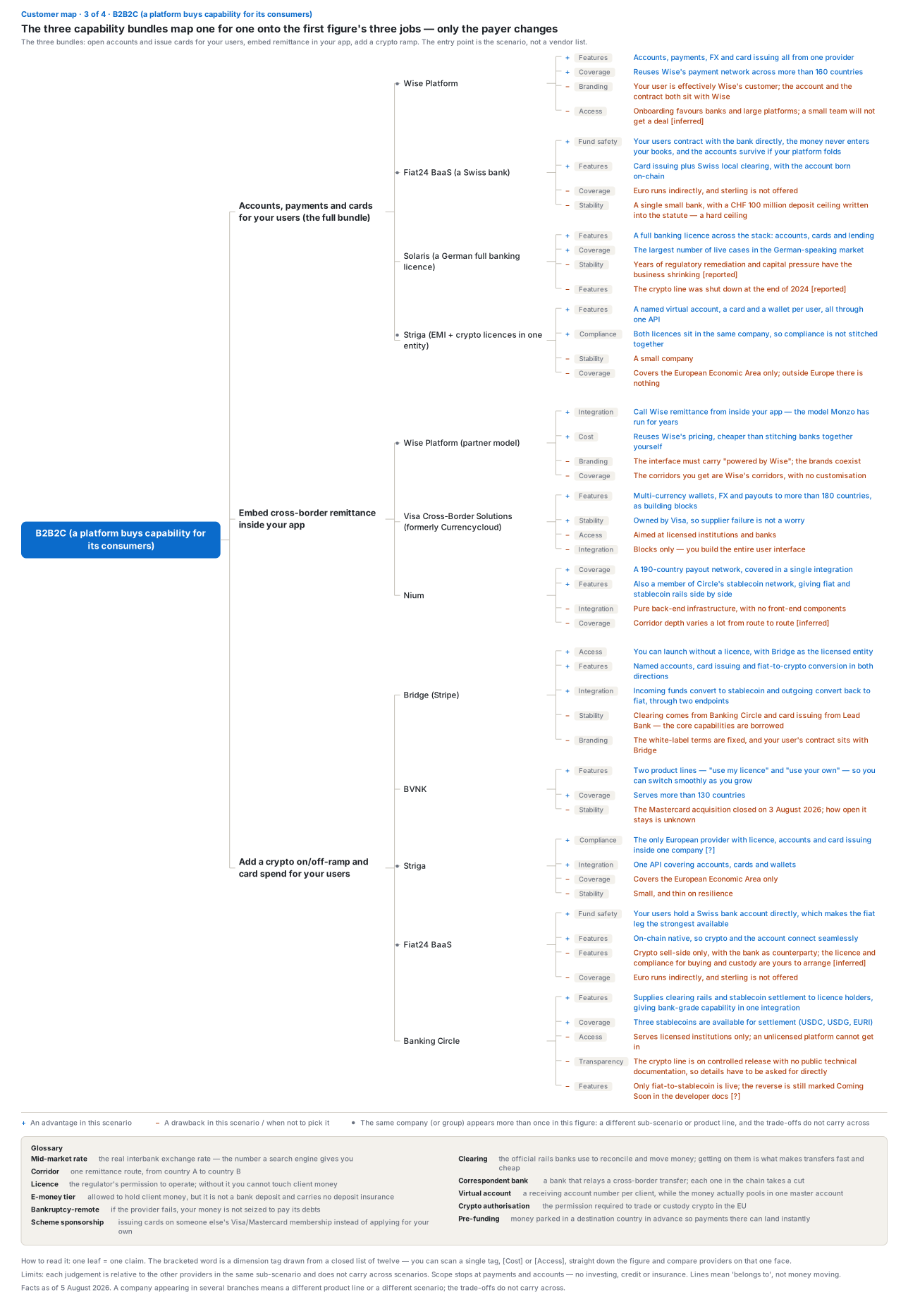
From this section on, the payer changes. In the first two figures the user pays; here a platform pays for a capability and delivers it to its own individual users. The three bundles are: open accounts and issue cards for your users, embed a remittance feature inside your app, and add a crypto on/off-ramp for your users.
Lay this figure over the first one and the three bundles land exactly on the three jobs an individual had. The end demand has not changed at all; the only change is who pays for the capability. Which is why the consumer products of the first figure reappear here as their infrastructure namesakes: Wise becomes Wise Platform, Fiat24 consumer becomes Fiat24 BaaS — and why you should work out which side you are standing on before reading a figure, or you will mistake a supplier for a competitor.
4. B2B2B: A Platform Buys Capability for Its Business Clients
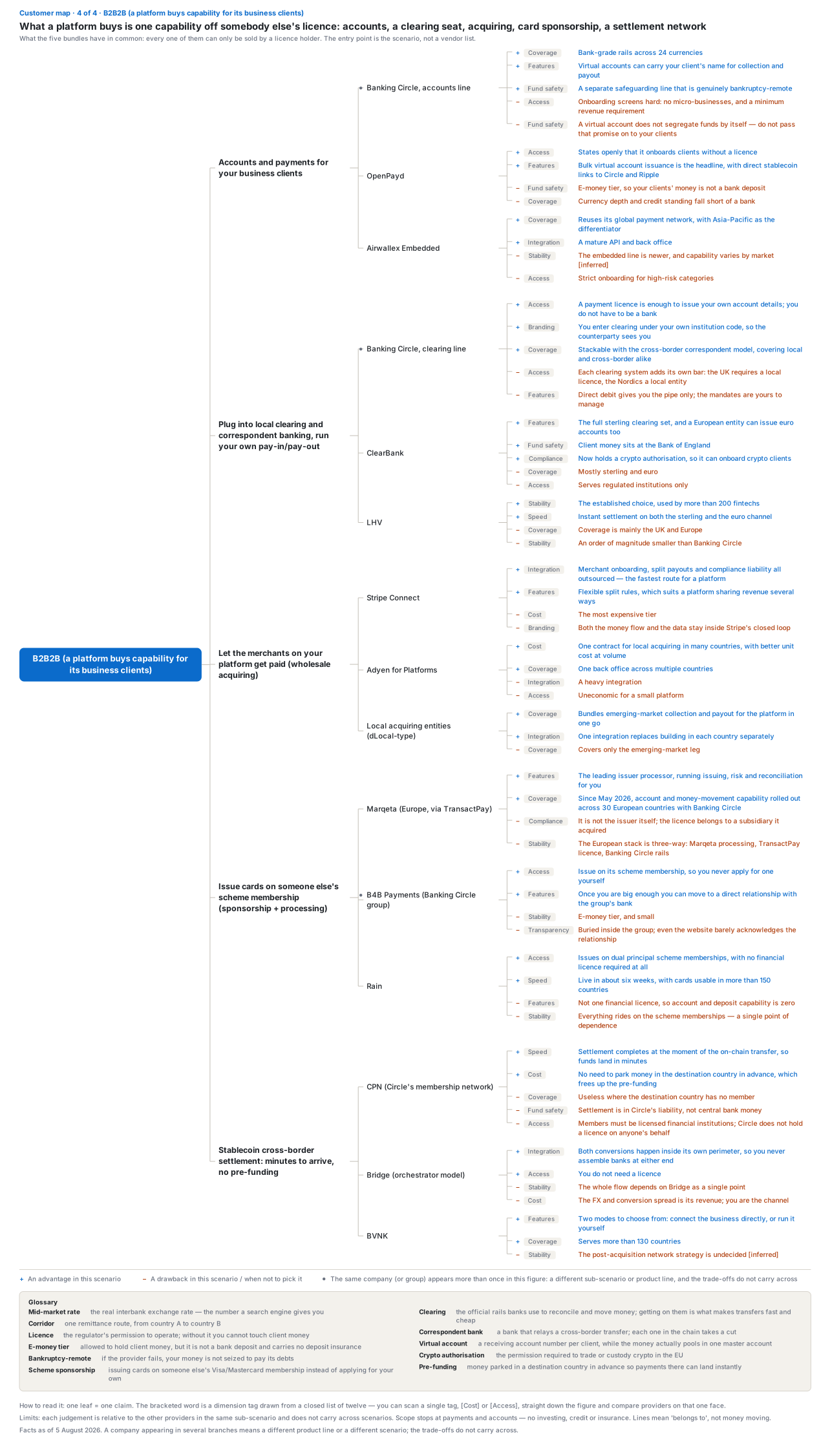
Again a platform is buying capability, but this time it delivers to business clients. The five bundles are: accounts and payments for your business clients, plugging into local clearing yourself, letting the merchants on your platform get paid, issuing cards on somebody else's scheme membership, and stablecoin cross-border settlement.
All five buy the same kind of thing: one capability off somebody else's licence. The five are not on one axis, though. Accounts and card sponsorship are capabilities a licence grants; a clearing seat is the "issues no licence, only recognises them" standing that Overview describes; wholesale acquiring and a settlement network are commercial arrangements built on top of a licence. So do not reach for the ①②③④ ruler in this section: what the five bundles share is not a tier, it is that every one of them can only be sold by a licence holder — and the reason a buyer buys is that its own cell is empty.
The most instructive thing in the figure is that the same Banking Circle splits into two nodes, one per product line. The accounts line sells multi-currency accounts and vIBANs, and its customers are platforms that cannot issue account details themselves. The clearing line sells Agency Banking — a clearing seat — and its customers are institutions that already hold a payment licence and want to enter clearing under their own institution code. One banking licence, cut into two products for two kinds of customer, with different entry bars and different pitches.
Previous: Chapter 9 · Fiat24: One Licence Holding Up a Whole Bank Back to the start: Chapter 0 · Overview: What Payment Licences Exist